

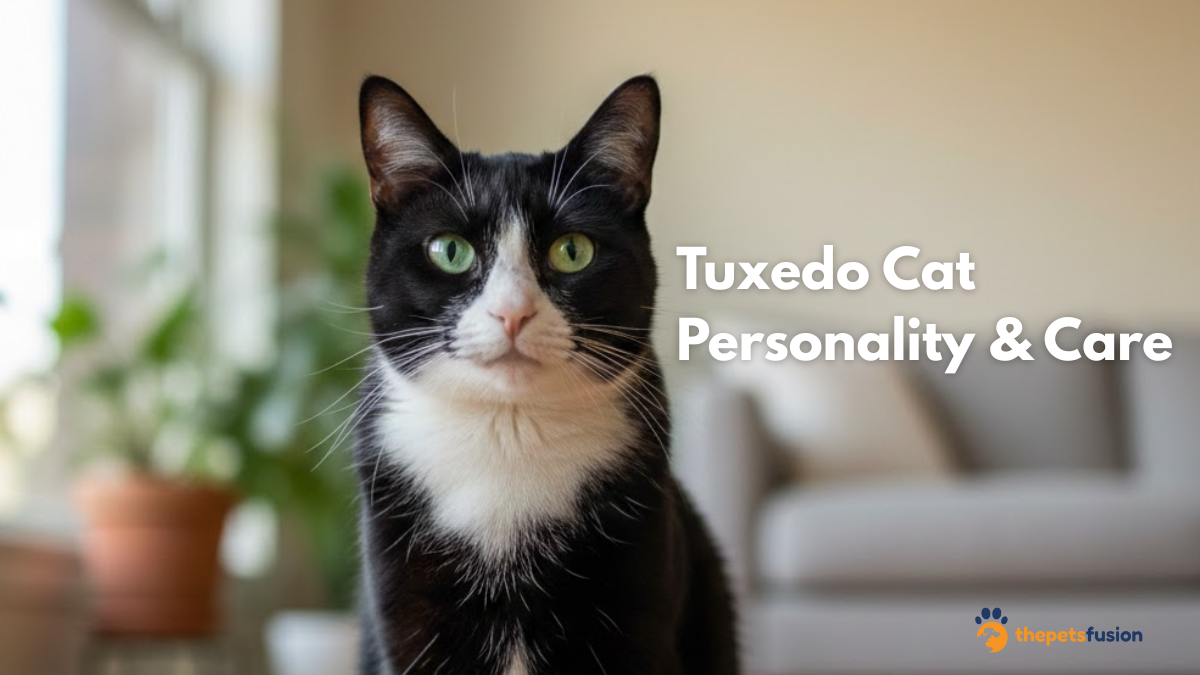
If you’ve ever seen a black-and-white cat sitting like royalty on a sofa or kitchen counter, chances are you’ve met what people call a tuxedo cat. The clean white paws, bright chest, and elegant contrast makes them look like they’re dressed for a special event. It’s one of the most recognizable looks in the cat world, and it often triggers the same questions from new pet parents: is it a real breed, are they friendlier, and do they need special care?
Here’s the clear, pet-owner friendly truth: tuxedo is a coat pattern, not a breed. That pattern can appear in many cats, especially mixed-breed domestic cats, and sometimes in purebred cats too. In this Pets Fusion guide, we’ll cover what the tuxedo pattern means, what to expect from temperament, how to care for your cat day-to-day, and how to adopt responsibly anywhere in the world.
What Is a Tuxedo Cat?
A tuxedo cat is a cat with a bold black and white bicolor coat pattern that looks like formal wear. The classic look usually includes a darker body with a white chest, white paws that look like boots, and sometimes white on the chin, belly, or face.
Because it’s only a pattern, the tuxedo look can appear in short-haired, medium-haired, or long-haired cats. Many are mixed-breed domestic cats. Some purebreds can also carry similar bicolor markings, but the pattern itself is not a breed name.
Quick answer: if someone asks what breed it is, the accurate response is that tuxedo is the markings, and the breed (if known) is separate.
Personality: Are Tuxedo Cats Friendlier or Smarter?
Many owners describe tuxedo cats as affectionate, confident, playful, and social. You’ll hear a lot of “my tuxedo is the most loyal cat ever” stories. But for accuracy and trust: coat color does not guarantee personality.
Your cat’s behavior depends more on genetics, early socialization, environment, and daily enrichment. If you’re adopting, focus on the individual cat. Watch how the cat responds to gentle handling, play, and new people. That will tell you more than coat pattern ever will.
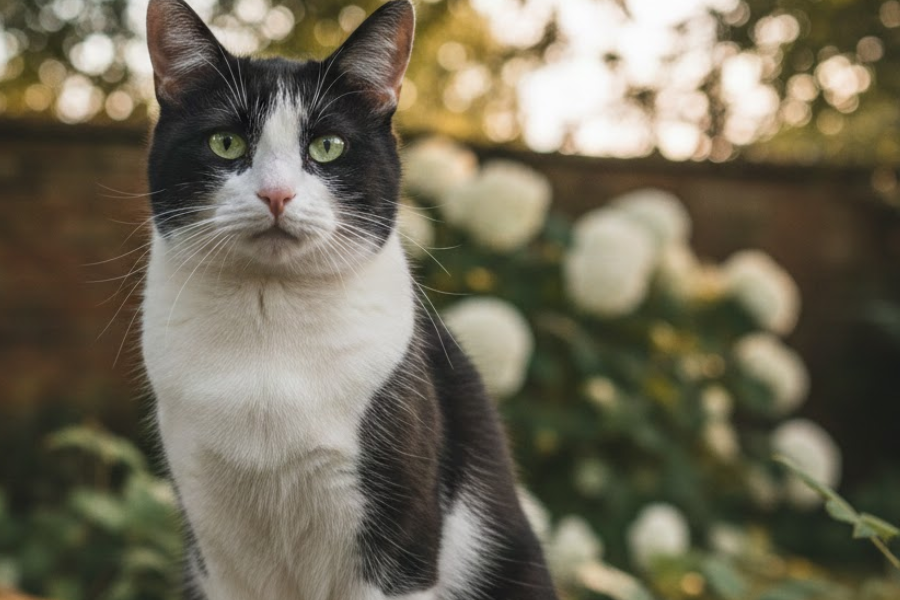
Why Does the Tuxedo Pattern Happen?
Coat patterns come from genetics. The tuxedo look happens when a cat has genes for a darker coat plus a separate white spotting gene that prevents pigment from showing in certain areas. That’s what creates the sharp contrast and tidy white patches.
No one can point to one single origin country for tuxedo markings because bicolor patterns appear naturally in cat populations worldwide. That’s why you’ll see this pattern commonly in shelters in many countries.
Appearance: Variations You Might See
Most cats keep their bicolor layout from kittenhood to adulthood. Common variations include classic tux pattern, masked style, a white nose stripe, or a small dark patch at the throat on white fur that looks like a bow tie.
Some people search gray tuxedo cat or grey tuxedo cat. Traditionally, tuxedo refers to black-and-white. But many owners use the term for gray-and-white bicolor cats too because the formal wear look is similar.
If you’re choosing a cat for your home, don’t choose only by markings. Look at coat length, grooming needs, energy level, and how the cat behaves during interaction.
Daily Care: The Routine That Keeps Cats Healthy
The tuxedo pattern doesn’t require special care. What matters is a stable routine that supports calm behavior and long-term health.
Litter box basics: place the box in a quiet, accessible area, scoop daily, deep-clean regularly, and in multi-cat homes, aim for one box per cat plus one extra. Many litter issues are not “bad behavior,” they’re stress, pain, or box setup problems. Fix the environment first before blaming the cat.
Exercise and enrichment: cats are natural hunters. Even indoor cats need short daily hunt sessions through play. Use wand toys, puzzle feeders, cat trees, window perches, and scratching posts. A simple routine that works for most homes is two short play sessions daily, adjusted to age and energy.
If your cat has loafing behavior, it’s usually a normal comfort posture. This posture often means your cat feels safe, comfortable, and relaxed. If loafing happens alongside hiding, appetite changes, or low energy, then it’s worth observing more closely and checking with a vet.
Tuxedo Cats With Kids and Other Pets
A common concern for families is whether a new cat will adapt to children or existing pets. The good news: many bicolor cats settle well into family life when introductions are done patiently.
With kids, teach these rules early:
Let the cat approach first
No tail pulling, chasing, or loud cornering
Hands stay gentle, especially around belly and paws
Create a cat safe zone where kids don’t disturb the cat
With other cats, slow introductions matter:
Separate rooms at first
Swap bedding for scent exchange
Short supervised meetings, then gradually increase time
With dogs, the safest plan is controlled introductions:
Dog on leash, calm environment
Provide high escape routes for the cat (cat trees, shelves)
Reward calm behavior on both sides
A confident, social cat often does well, but every cat is individual. If you’re adopting, ask the shelter or foster if the cat has lived with kids, cats, or dogs before.
Grooming: Brushing, Nails, and Teeth
Grooming needs depend on coat length, not color pattern.
Brushing: short hair usually needs weekly brushing, while long hair may need brushing several times per week to prevent mats. Brushing also reduces hairballs and helps you spot skin issues early.
Nails: trim every 2 to 3 weeks and keep scratching posts available. Scratching is normal and healthy. Offer both vertical and horizontal scratchers, and place them near sleeping areas and entrances where cats naturally stretch.
Dental care: dental disease is common in cats and often overlooked. If your cat tolerates it, brush teeth a few times per week using cat-safe toothpaste. You can also support dental health with vet-approved dental treats or diets, but brushing and routine checkups remain the most reliable options.
Common Health Issues to Watch For
There’s no single health condition linked to tuxedo markings. Risk depends on genetics, age, diet, and lifestyle. Still, every cat owner should watch for dental disease, obesity, kidney disease in senior cats, hyperthyroidism in older cats, and diabetes risk often connected to weight.
The best prevention is simple: keep your cat lean, support hydration, and maintain regular veterinary visits. Indoor living also reduces risks from fights, injuries, and infections.
Practical signs that should push you to call a vet sooner:
Sudden appetite changes or refusing food
Drinking much more water than usual
Hiding more than normal
Vomiting repeatedly or diarrhea that lasts more than a day
Litter box changes, straining, or accidents
Bad breath, drooling, or pawing at the mouth
Diet and Nutrition
Feed your cat a balanced diet based on age and health. Wet food supports hydration for many cats, dry food can work in measured portions, and fresh water should always be available. Avoid too many treats and monitor weight.
A simple long-term rule: keep your cat lean and hydrated. It prevents many common issues and improves quality of life, especially as cats age.
If you’re unsure about portions, your vet can guide you based on body condition score rather than guessing. That one step alone prevents years of slow weight gain.
Indoor vs Outdoor: Safety Tips for an International Audience
People across different countries have very different cat lifestyles. In some places, indoor living is the norm. In others, cats roam freely. From a safety and health perspective, indoor is usually the safer choice because it reduces road accidents, poisoning risks, fights and bite wounds, parasites, infectious diseases, and lost cat situations.
If you want outdoor time, consider safer alternatives:
Catio or enclosed balcony
Harness training (start slow, reward-based)
Supervised garden time
If your local area has lots of traffic, stray animals, or harsh weather, indoor living with strong enrichment is the best balance.
Where to Adopt or Buy
Adoption: black-and-white bicolor cats are common in shelters and rescues, making adoption a great option. Ask about vaccination and spay/neuter status, temperament, litter habits, and any known medical notes.
When choosing a cat, use this simple good match checklist:
The cat allows gentle handling
The cat shows curiosity, not constant fear
The cat eats normally and uses the litter box
The cat’s eyes and nose look clean
The shelter can share any medical history they know
Buying from a breeder: if you want a specific breed that can appear in a tux pattern, choose ethical breeders who provide health records, show living conditions, and offer clear contracts. Avoid buying purely for markings. A healthy, well-socialized cat is always a better investment than a perfect pattern.
Related Reads on Pets Fusion
For better internal linking and time on site, add 2 to 3 related reads from your site like your Cats and Kittens category, cat name guides, and any beginner-friendly posts that match new cat owners. This helps readers continue their journey on your site and improves topical authority across your cat content.
Publisher Note: Add a small image near the end showing a tuxedo cat name list or “new cat checklist” graphic for Discover.
Read related article: Black and White Dog Names for Your Adorable Pup
Conclusion
A tuxedo cat isn’t a breed, it’s a beautiful black-and-white coat pattern that can appear in many different cats. What matters most is not the markings, but the individual cat’s health, socialization, and the routine you build at home. If you provide clean litter habits, daily play, smart grooming, and consistent vet care, most cats will thrive and bond deeply with their families. Whether you adopt from a shelter or choose a specific breed, focus on temperament, long-term wellness, and a safe environment. That’s what turns a stylish-looking cat into a truly happy companion.
What is a tuxedo cat called
A tuxedo cat is simply a black and white bicolor cat with a tuxedo like pattern.
Are tuxedo cats a breed
No tuxedo cats are not a breed. The tuxedo pattern can appear in many different breeds.
Do tuxedo cats get along with families
Yes tuxedo cats are usually friendly and do well with families children and even other pets when socialized properly.
Are tuxedo cats good indoor pets
Yes they adapt very well to indoor living as long as they get enough playtime and mental stimulation.